US100 Elliott Wave: Wave (5) Setup After Clean Wave 4
Your job is not to win. Unless you understand this one sentence, you will trade forever in anxiety and fear.
Your job is not to win. Unless you understand this one sentence, you will trade forever in anxiety and fear.
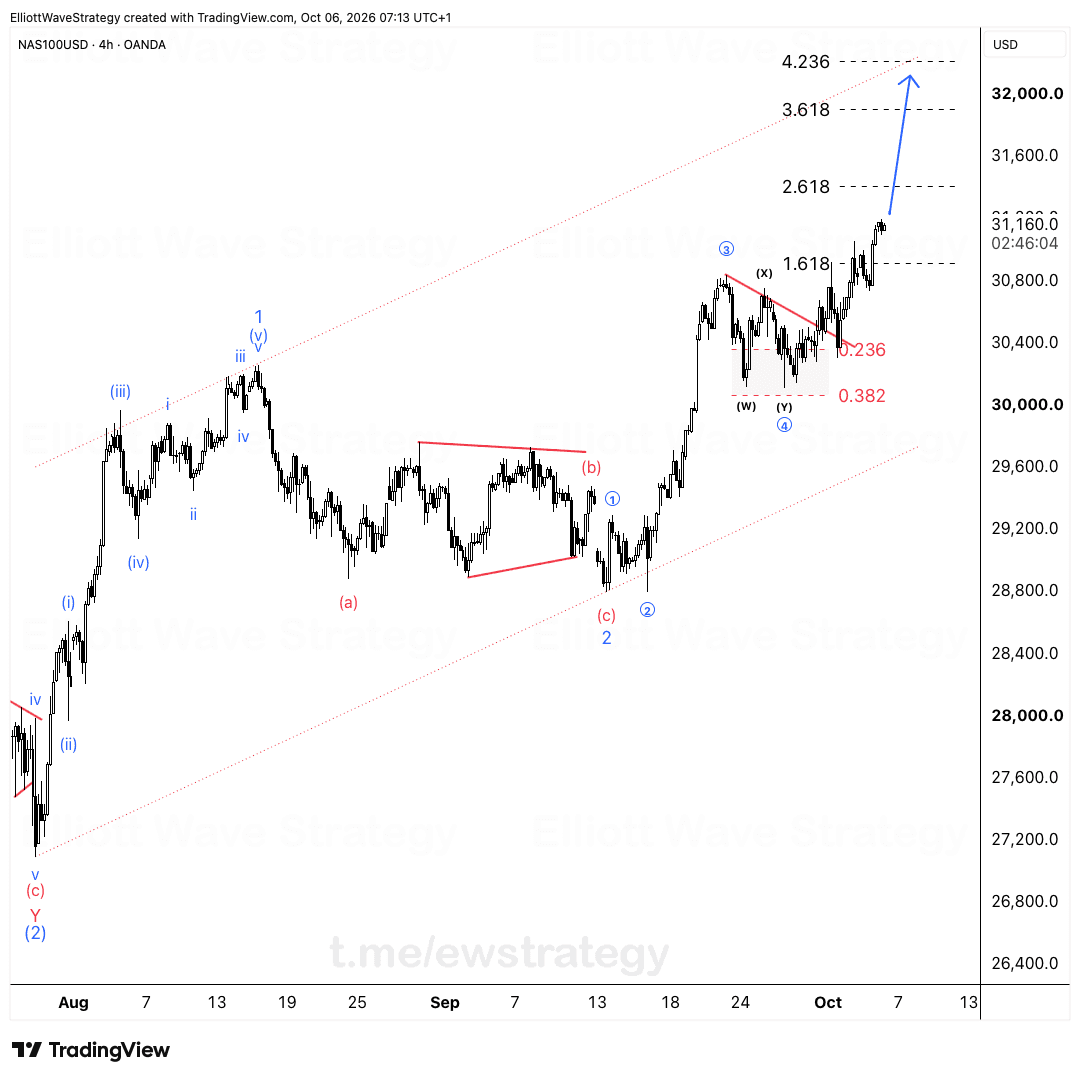
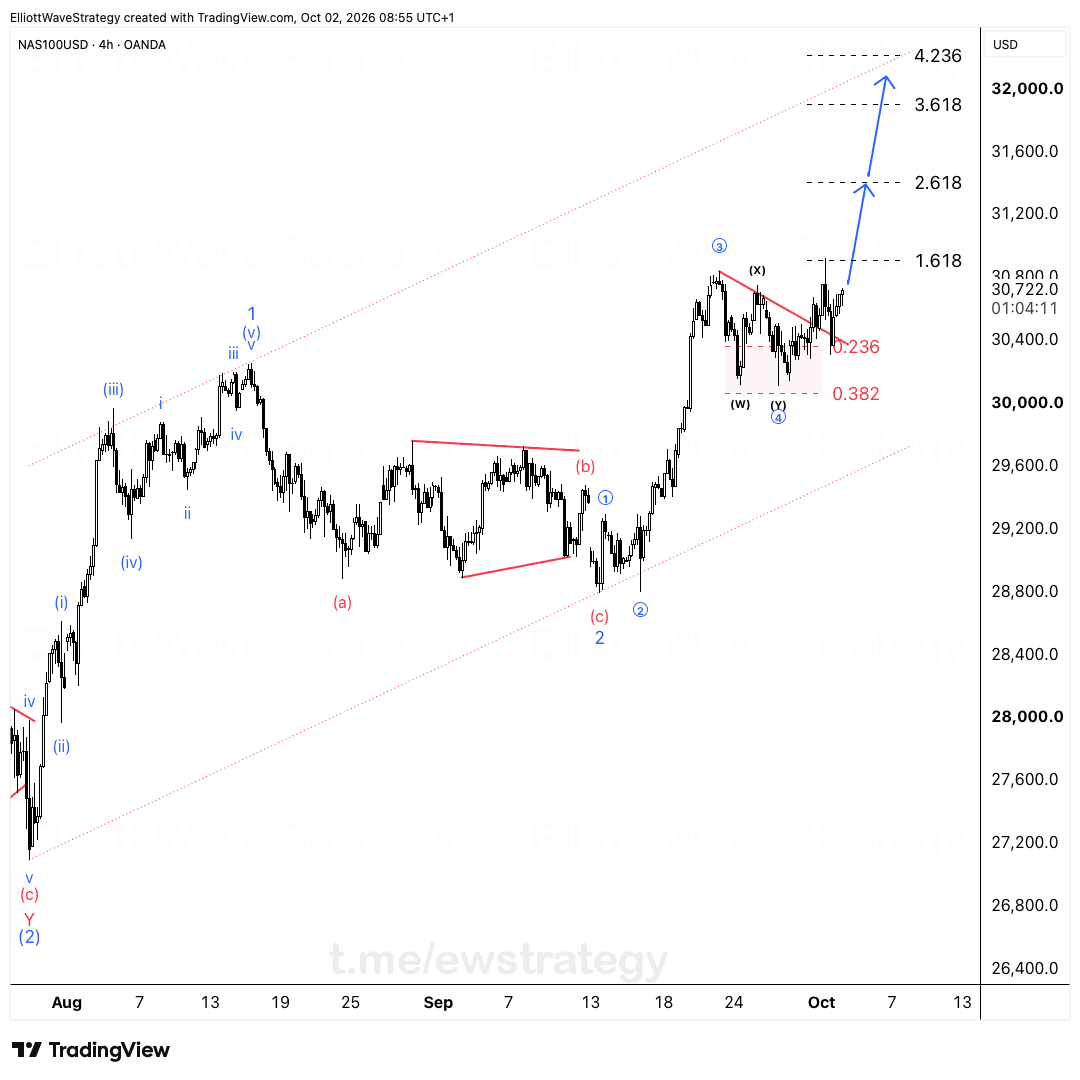
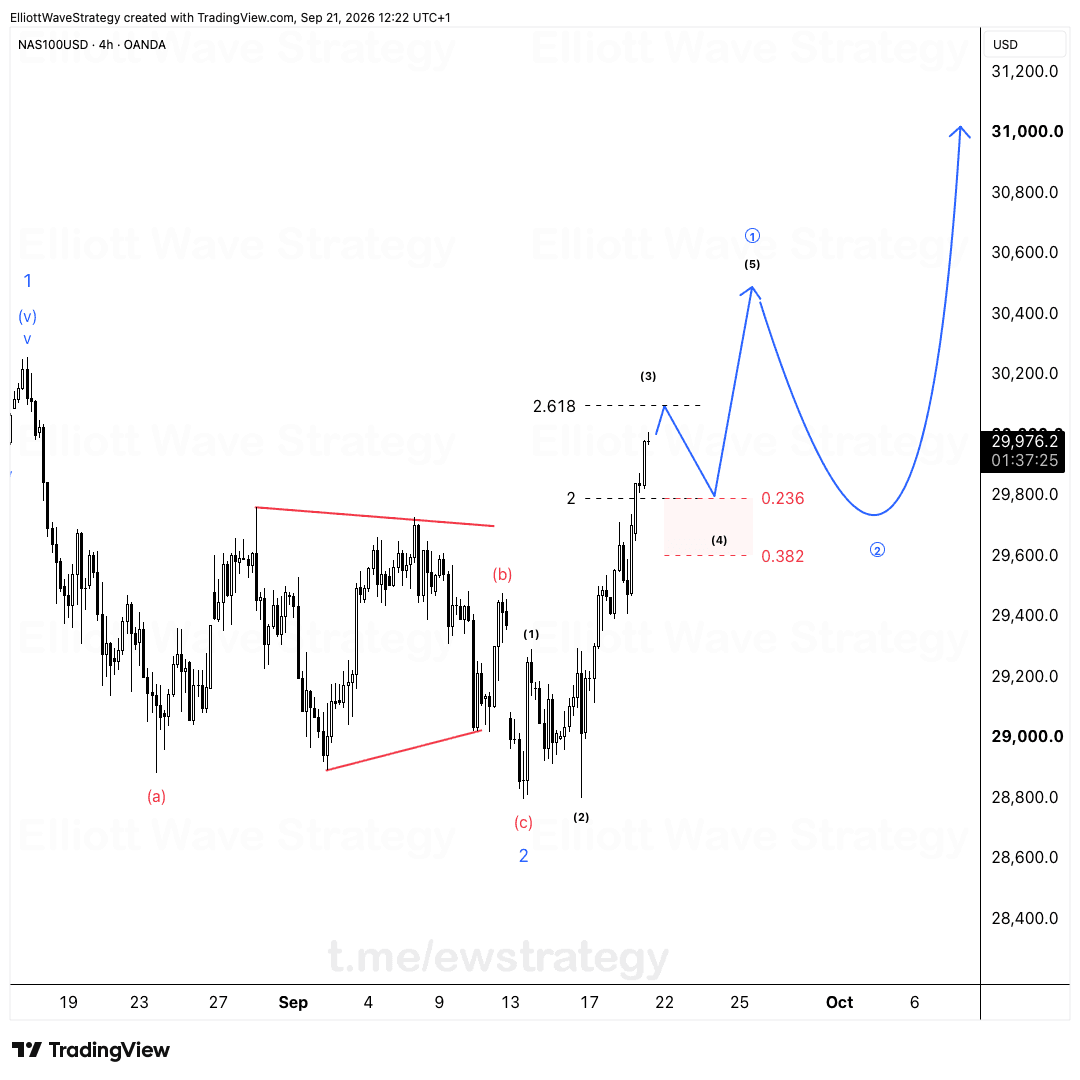
The US100 chart shows a completed Wave (4) correction. Price retraced into the 23,503.7 and 23,340.7 zone, exactly where the 0.5 and 0.618 Fibonacci retracements sit. Those levels did their job. The structure is clean.
But amateur traders see this setup and immediately think they need to buy right now before it takes off without them. They panic into trades because they focus on the wrong thing entirely.
What does the US100 Elliott Wave count show right now
The count on the 4h chart traces back through a larger corrective sequence: an (A)-(B)-(C)-(4) structure completing a Y wave down into (4), followed by a fresh five wave advance starting at wave 1. That impulse is now sitting at wave 2 of a higher degree, with wave 1, wave 2, and the internal ① through ④ sub-waves already printed on the chart.
The invalidation line sits at 24,194.3. As long as price respects that level, the bullish structure toward Wave (5) stays valid. Break below it and the entire count needs rethinking.
Why the Wave (5) target zone matters more than the entry
Cetin's projection on the chart extends into a Wave (5) target box between the 1.618 extension at 25,744.7 and the 2.0 extension at 26,272.4. That is where wave ⑤ of the smaller degree is expected to complete inside the larger wave 3 structure.
But a target box is not a signal to chase price. It is a map of where the structure is headed if the rules hold. The breakout structure of Wave (5) needs to establish itself first. Jumping in because a number looks attractive is exactly the behavior that turns a clean setup into a bad trade.
Why process matters more than prediction in Elliott Wave trading
Winning or losing is a result, not a job. Your only job is to execute the rules.
The rules say: wait for confirmation. Let the Wave (5) breakout structure establish itself. Risk only what you can afford to lose. Plan your exit before you enter.
When you accumulate those disciplined actions, the results follow. The trader who follows the plan and takes a losing trade has done his job perfectly. The trader who wins but breaks his rules has failed completely, even if his account shows a profit that day.
The difference between profitable traders and everyone else is not prediction accuracy. It is process consistency. Anyone can call a direction correctly once. Few can repeat a rules based process for years without letting fear or greed override it.
Closing thought
The US100 chart lays out a clean case for Wave (5), with defined Fibonacci levels, a defined invalidation at 24,194.3, and a defined target zone. None of that removes the need for confirmation before acting. The structure gives you a map. Discipline decides whether you use it correctly.
Key Takeaways
- •US100 completed Wave (4) at the 0.5 and 0.618 Fibonacci retracements near 23,503.7 and 23,340.7.
- •The invalidation level for the current US100 bullish count sits at 24,194.3.
- •The Wave (5) target zone on US100 spans the 1.618 extension at 25,744.7 to the 2.0 extension at 26,272.4.
- •US100 traders who chase entries before confirmation are reacting to fear, not following a process.
- •Process consistency, not prediction accuracy, separates disciplined traders from everyone else.
Frequently Asked Questions
What invalidates the bullish US100 Elliott Wave count?
A break below 24,194.3 would invalidate the current wave count that projects a Wave (5) advance toward the 25,744.7 to 26,272.4 zone.
Where is the Wave (5) target on US100?
The chart projects Wave (5) completing between the 1.618 Fibonacci extension at 25,744.7 and the 2.0 extension at 26,272.4.
Why does Cetin say to wait for confirmation instead of buying immediately?
Because entering before the Wave (5) breakout structure establishes itself is reacting to fear of missing out rather than following a defined rule based process.
Disclaimer: This analysis is for educational purposes only and does not constitute financial advice. Elliott Wave analysis involves subjective interpretation. Always do your own research and manage your risk accordingly.
Get Full Coverage for All 27 Instruments
Premium members receive daily wave counts with entry zones, targets and invalidation levels, published daily across all 27 instruments.
View Premium Plans