BTCUSDT Elliott Wave: Why Wave (B) Isn't Done Yet
What if the worst part of this correction hasn't started yet?
What if the worst part of this Bitcoin correction hasn't started yet?
Most traders staring at BTCUSDT right now see a bounce and call it strength. The chart tells a different story. The massive impulse from the October 2023 low finished its full 5-wave cycle at 126K. That's wave (5) of a larger degree, labeled circled 5 on the chart. Since then, BTCUSDT has been carving out a correction, and the internal structure says that correction is far from finished.
What does the current wave count show on BTCUSDT?
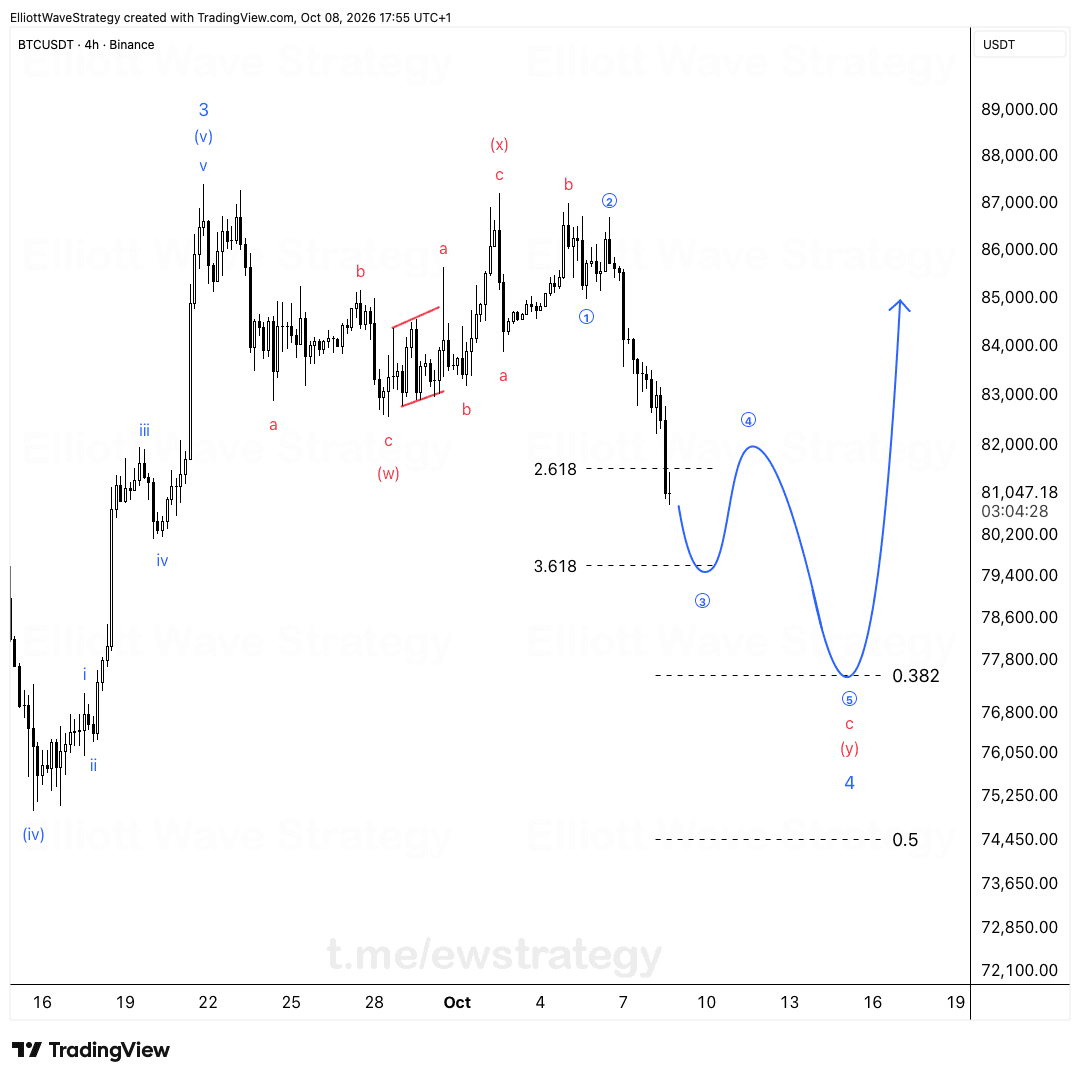
After the top at 126K, Bitcoin dropped into a Wave (A) that bottomed with a clear W-X-Y structure. Inside that decline, wave W formed, followed by an X wave, then a Y wave that stretched into a contracting triangle before the low. That low marked the end of wave (A).
From there, BTCUSDT built its Wave (B), and this is where things get complicated. The internal labeling on the chart shows another W-X-Y sequence inside (B), with the final Y leg forming its own (w)-(x)-(y) triangle-like structure that pushed price up toward the 87,000 to 88,500 zone. That's a lot of overlapping sub-waves for a simple corrective bounce. Complex corrections like this typically don't resolve quickly, and they usually don't resolve upward.
Why does a complex Wave (B) matter for what comes next?
A Wave (B) that builds this many internal pieces, W-X-Y with nested triangles, is telling you something about the market underneath it. It's absorption, not accumulation for a new bull run. Corrective waves take their time chopping sideways and up before the next leg down begins, and that's exactly what the price action from Q1 into Q2 2026 shows on this chart.
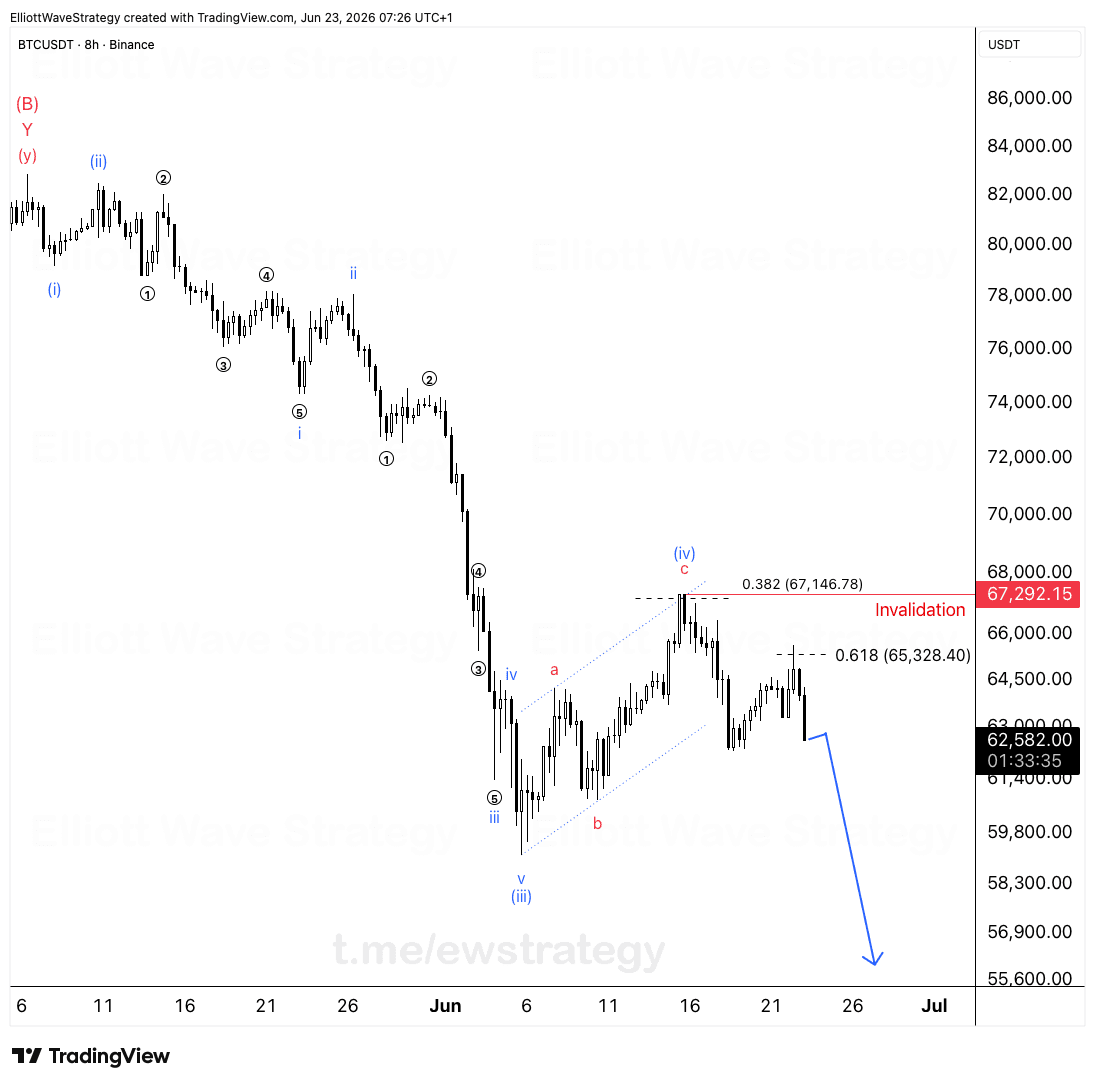
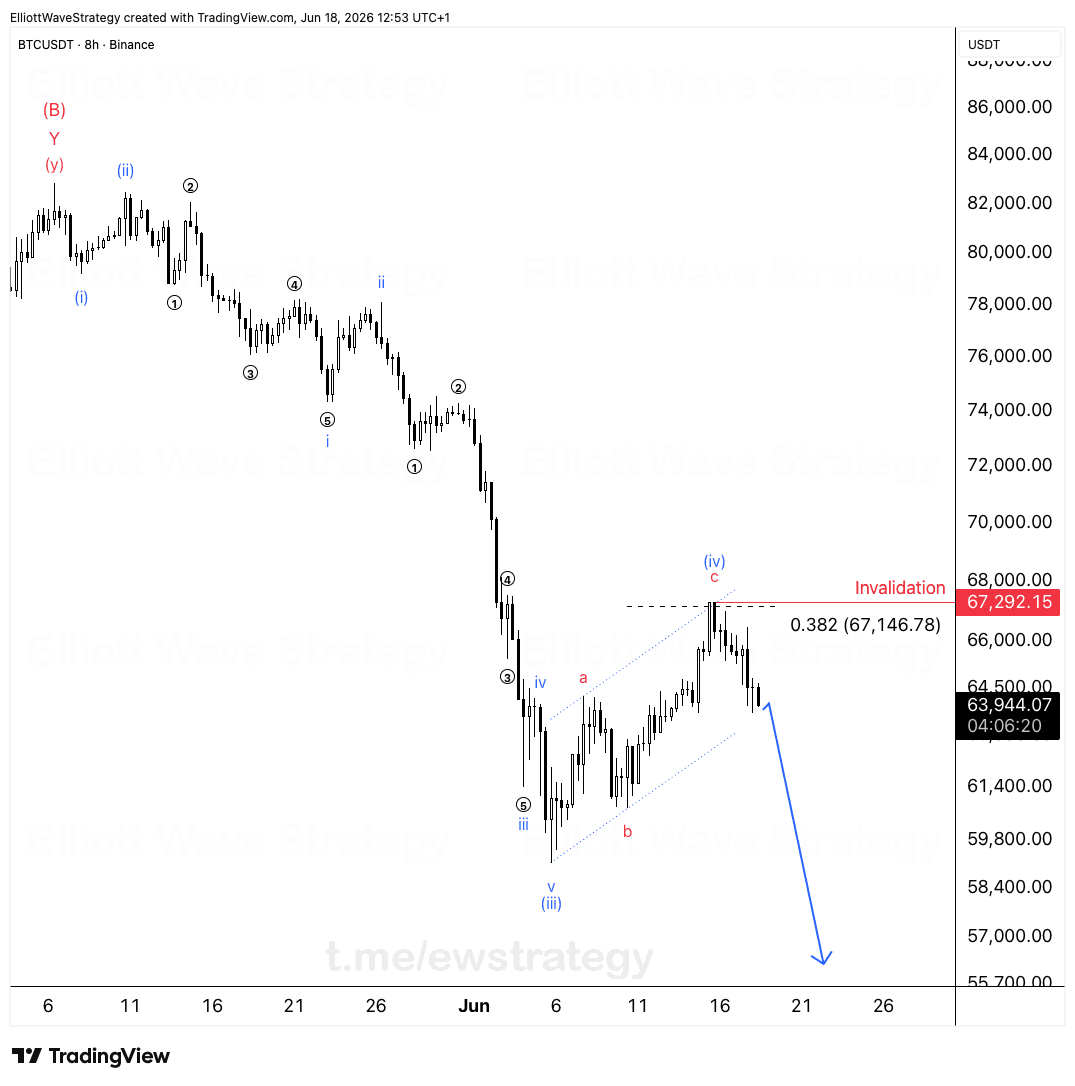
The blue arrow drawn on the chart points from the (B) high near 87,000 down toward the 39,500 zone. That's the projected Wave (C) of this larger correction. It's not a guess pulled from nowhere, it's what the wave structure implies once a corrective (A)-(B)-(C) sequence completes its middle leg and starts its final decline.
Is this just another dip to buy?
Most crypto traders call every bounce "the bottom." They buy every pullback assuming Bitcoin corrections are shallow, 20% moves that resolve fast. That's not how this market has behaved historically, and it's not what the current structure suggests either.
Corrections in Bitcoin get deep. They get painful. They test every holder's conviction before they're done. Until BTCUSDT breaks the internal trendlines defining this (B) wave structure and shows a real impulsive decline, every bounce inside this range is just another opportunity for distribution at better prices, not a sign the correction is over.
The structure hasn't given the all-clear yet. Watching for a confirmed impulsive move below the (B) wave's supporting trendline would be the first real signal that Wave (C) is underway toward that 39,500 projection.
Key Takeaways
- •BTCUSDT completed a full 5-wave impulse from the October 2023 low at the 126K top, labeled circled wave (5).
- •The current Wave (B) on BTCUSDT shows a complex W-X-Y internal structure with nested triangles, not a simple bounce.
- •The chart's projected path for BTCUSDT points toward the 39,500 zone as the target for Wave (C).
- •Buying every BTCUSDT dip during a Wave (B) correction risks getting caught before the deeper Wave (C) decline.
- •A confirmed impulsive break below the Wave (B) trendline would be the first signal that BTCUSDT's Wave (C) has started.
Frequently Asked Questions
What would invalidate the bearish BTCUSDT Wave (C) count?
A sustained impulsive breakout above the Wave (B) high near 87,000 to 88,500 with clean 5-wave structure would undermine the case for a deeper Wave (C) decline toward 39,500.
Why is BTCUSDT's Wave (B) considered complex?
The internal labeling shows a nested W-X-Y sequence with triangle structures inside the Y leg, which is far more layered than a typical single zigzag correction and signals more time and price needed before it resolves.
Does this Elliott Wave count mean Bitcoin is in a bear market?
It means BTCUSDT is inside a larger corrective phase following the completed 5-wave impulse to 126K, and the structure points toward further downside in Wave (C) before any new bullish sequence can begin.
Disclaimer: This analysis is for educational purposes only and does not constitute financial advice. Elliott Wave analysis involves subjective interpretation. Always do your own research and manage your risk accordingly.
Get Full Coverage for All 27 Instruments
Premium members receive daily wave counts with entry zones, targets and invalidation levels, published daily across all 27 instruments.
View Premium Plans