USDJPY Elliott Wave: Wave (B) Grind Before Wave (C)
Every boring correction is just building fuel for the next explosive Elliott Wave.
Every boring correction is just building fuel for the next explosive Elliott Wave move. USDJPY is proving that right now.
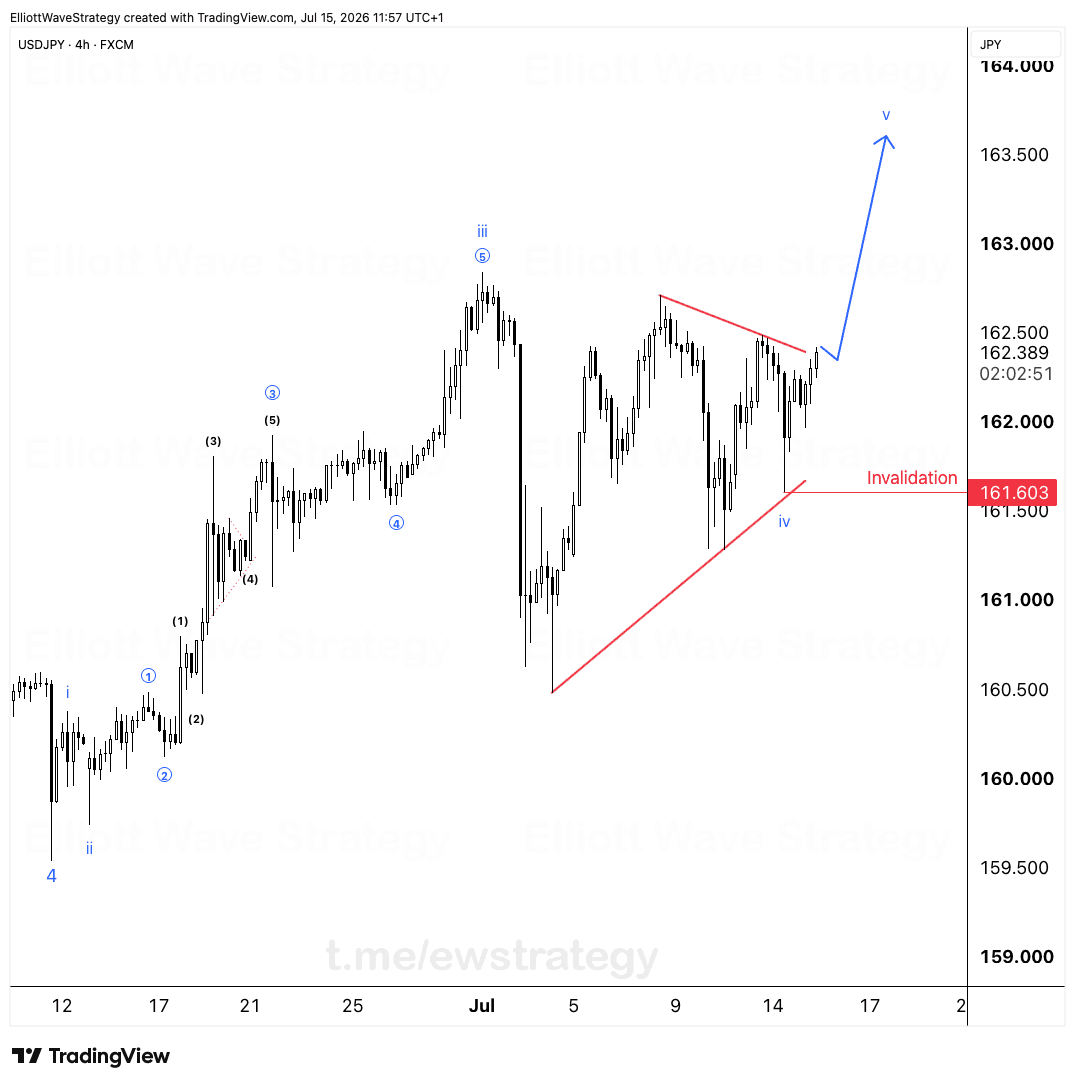
The 4h chart shows a complex ABC correction unfolding as Wave (B). Price is grinding sideways, chopping around, doing absolutely nothing exciting. That's not a flaw in the structure. That's the job description of a Wave (B).
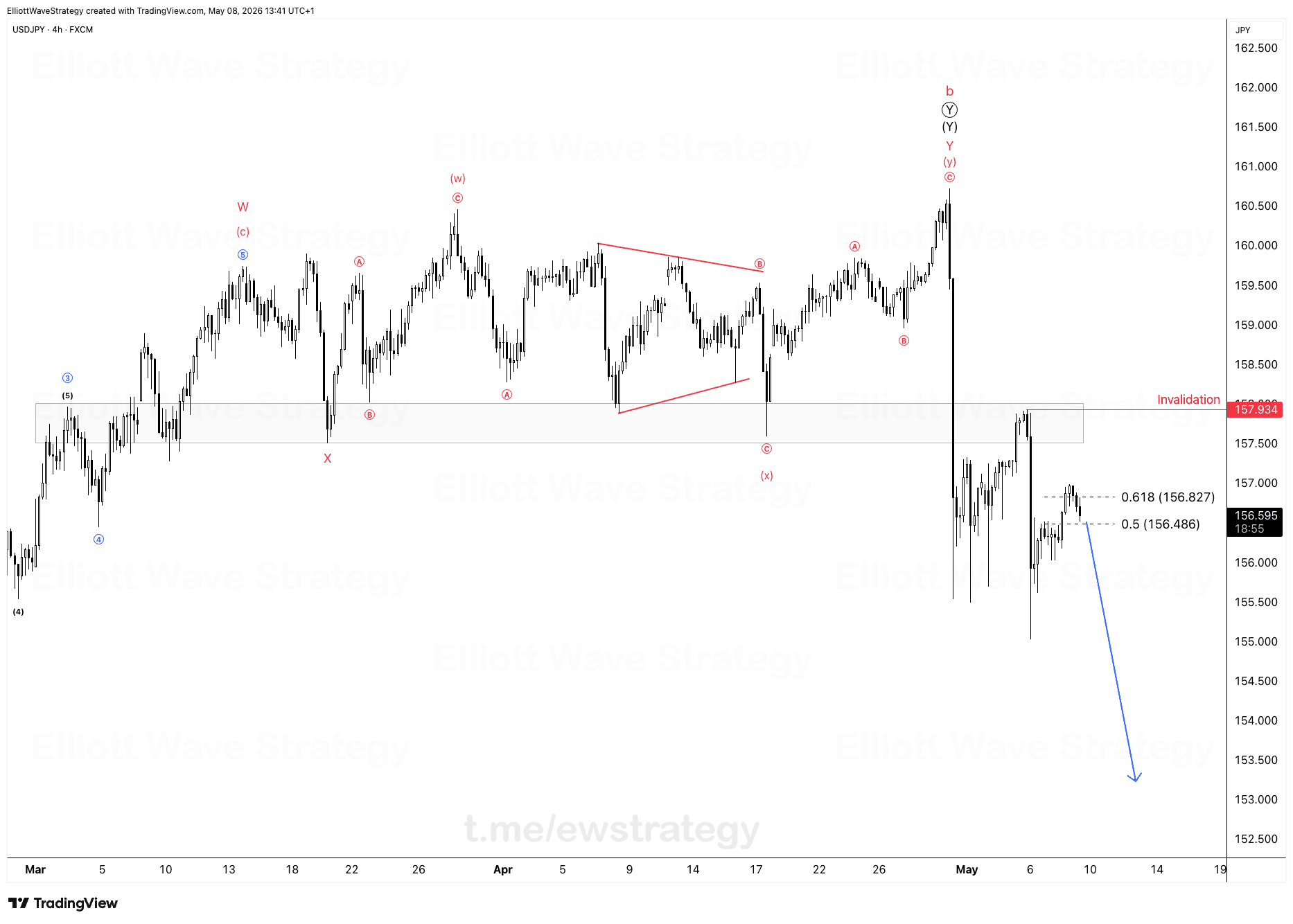
Wave (B) corrections exist to test patience. They shake out traders who need constant action to feel like something is happening. USDJPY has been doing exactly that since the (A) high near 160.5, carving out an A-B-C inside the correction with a contracting triangle visible in the middle leg before the C wave pushed down toward 157.592.
What does the USDJPY chart actually show right now
Trace the count back to the low near 152 in mid-February. From there, USDJPY built a clean five-wave impulse: wave 1 up, wave 2 down into the triangle-like base, then waves 3, 4 and 5 stacking higher into the (A) top above 160. Inside that move, wave 3 breaks into its own five sub-waves ((1) through (5)), which is standard impulse behavior and confirms the trend structure was genuine, not a random rally.
Once (A) topped out, the pair rolled into the (B) correction that's frustrating everyone watching it now. Inside (B), price traced its own A-B-C: A down, B up into a contracting triangle, and C down into the 157.592 zone marked as invalidation on the chart. That level is the line in the sand. Below it, the bullish count for Wave (C) stops being valid.
Why the sideways grind isn't dead money
Amateur traders read chop as "nothing is happening" and lose interest. Professionals read chop as compression. Every session USDJPY spends grinding inside this (B) correction is a session building the setup for wave (C).
That's how corrective waves behave across every timeframe and every asset class. They absorb time and volatility without going anywhere, then release it all at once when the corrective structure completes. The chart's own trajectory, drawn from the 157.592 low toward the 161.5 area, reflects that expected release into a new impulse leg.
What would confirm or kill the Wave (C) scenario
Confirmation comes from USDJPY holding above 157.592 and starting to impulse higher in five waves, mirroring the structure that built wave (A) off the February low. A clean break and hold below 157.592 invalidates the (B) correction count and forces a reassessment of the entire structure from the (A) high.
Until then, the sideways price action is doing exactly what Wave (B) corrections are supposed to do. It's testing who's still paying attention when nothing looks exciting.
The market rewards patience here, not constant stimulation. Traders who can sit through the boredom of a B wave are the ones positioned when the C wave finally moves.
Key Takeaways
- •USDJPY is completing a complex ABC correction inside Wave (B) on the 4h chart.
- •The invalidation level for the bullish USDJPY Elliott Wave count sits at 157.592.
- •A contracting triangle formed inside the B leg of the correction before price pushed down toward the invalidation zone.
- •If USDJPY holds above 157.592, the count favors an explosive Wave (C) advance toward the 161.5 region.
- •The prior USDJPY impulse from the February low to the (A) high confirms a genuine five-wave trend structure, not just noise.
Frequently Asked Questions
What invalidates the bullish USDJPY Elliott Wave count?
A sustained break below 157.592 invalidates the Wave (B) correction count and would require reassessing the structure from the (A) high near 160.5.
Why is USDJPY moving sideways right now?
USDJPY is tracing a complex ABC correction as Wave (B), which typically produces choppy, directionless price action before the next impulse wave, labeled (C), begins.
What comes after Wave (B) in the current USDJPY structure?
If the correction holds above 157.592, the expected next move is an impulsive Wave (C) advance, with the chart's projected path pointing toward the 161.5 area.
Disclaimer: This analysis is for educational purposes only and does not constitute financial advice. Elliott Wave analysis involves subjective interpretation. Always do your own research and manage your risk accordingly.
Get Full Coverage for All 27 Instruments
Premium members receive daily wave counts with entry zones, targets and invalidation levels, published daily across all 27 instruments.
View Premium Plans